
Spotlight: 2026
How OTI Built the Foundation for Atlanta's Tech Rise
In 2024, Atlanta's Office of Technology and Innovation stopped talking about becoming a tech hub and started building one, line item by line item. The office facilitated $19.3 million in investments, brought 140+ new partners to the table, and put 4,773 Atlantans into STEAM, entrepreneurship, and technical training. But the story of the year isn't just the totals. It's the infrastructure underneath them: new capital tools for founders, a college pipeline that runs through seven campuses, and AI deployed on real city problems, from litter to leaking water mains. And it sets up the harder question for what comes next: whether a strong foundation turns into a pipeline that scales. Here's the roundup.
Economic & Ecosystem Growth: A Year of Building
By the numbers
- $19.3 million in investments facilitated across company funding, programmatic initiatives, and salary inflows
- $8.9 million in salaries generated for Atlanta residents
- 140+ new partnerships established across industry, academia, and government
- 83 full-time tech positions created or filled in Metro Atlanta
- 120+ companies supported through direct programs, mentorship, and investment connections
The policy case
Some of OTI's biggest wins happened in council chambers, not conference rooms. The office played a key role in the Atlanta City Council's passage of Resolution 24-R-3771, which opened the door to venture capital investment. The City followed with a $70 million commitment to private equity managers, $30 million of it earmarked for local funds. That's public capital working in Atlanta's own backyard. "We have worked tirelessly to connect the dots," said Donnie Beamer, Senior Technology Advisor to the Mayor. "The progress we have made is only the beginning."
ACES: a seven-campus pipeline
OTI launched the Atlanta Collegiate Entrepreneurship Syndicate (ACES) to turn the city's college density into a founder advantage. The founding members are Georgia Tech, Emory, Georgia State, Spelman, Morehouse College, Morehouse School of Medicine, and Clark Atlanta. Working with ACES and the EDA, OTI invested $3 million in programs supporting underrepresented founders.
Technology Workforce Development: Talent at Every Entry Point
OTI's workforce strategy met Atlantans where they are, from rec-center gamers to college seniors to career changers. 4,773 residents took part in STEAM, entrepreneurship, and technical training programs in 2024.
Workforce Technical Certification Program. A 14-week program delivered 100 Google Career Certificates in Project Management and UX Design, capped by a graduation ceremony at City Hall.
Pathway to Tech in Atlanta. Backed by a $500K EDA grant, the program is preparing 1,300+ students for careers at companies like Amazon and Google. It sits alongside a $1 million EDA-backed program focused on technical training and job readiness for college students.
RenderATL. The conference drew 4,500 attendees to AmericasMart, and tech companies filled 70+ positions during the event. OTI partnered with New Relic on a hackathon that awarded $10K in prizes.
Esports Labs. New labs at the Thomasville and MLK recreation centers each engage 60+ young people every week.
Minecraft Build Challenge. More than 300 students across 108 teams logged 2,500+ hours of civic engagement through Minecraft.
Entrepreneurship & Business Growth
Atlanta Startup Growth Loan Program (ASGLP) launched with $2.2 million to give local tech startups something they rarely get early: patient, affordable capital. The program offers loans up to $150,000 at 3% interest with a six-month grace period, funding asset acquisition, hiring, revenue growth, and product development. Sixteen companies have received funding to date.
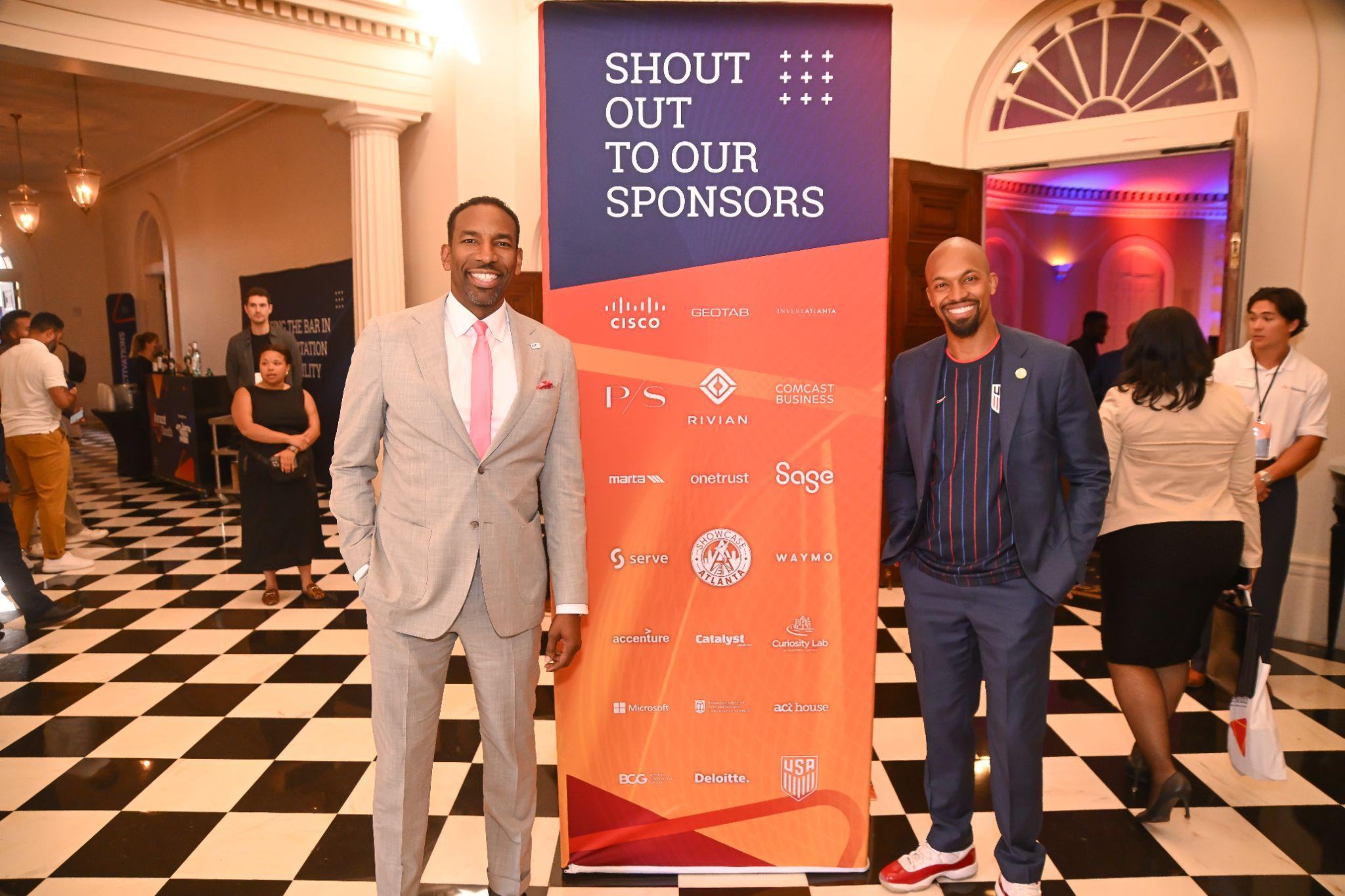
Avant South brought 400+ guests together during InnovATL to spotlight tech entrepreneurship in media, sports, and entertainment. On Day 1, ACES colleges competed in a $20K student pitch competition. Georgia Tech's XR Navigation took first place and Georgia State's Culturally Relevant Science placed second, and the competition led to $145K in additional funding and four new hires. On Day 2, leaders from Arthur M. Blank Sports & Entertainment, Netflix, Trilith, US Soccer, and United Talent Agency talked through how technology is reshaping their industries.
LIFT (Launch Incubator For Traction) targets early- to mid-stage Black STEM entrepreneurs in metro Atlanta with a competency-based program built around investor readiness. Run with the Center for Black Entrepreneurship at Morehouse and Spelman, LIFT worked with 14 companies and secured $1.5 million in committed funding.
TILE (Technology & Innovation Learning Experience) is a pilot led by OMED: Educational Services with Georgia Tech's Office of Commercialization and CREATE-X. Twelve students completed the summer pilot: six from Georgia Tech, three from Georgia State, two from Spelman, and one from Morehouse. Together they led five companies and received housing, mentorship, and leadership development. The program is designed to expand across ACES colleges and the University System of Georgia.
Tech-Driven Municipal Solutions: AI on the City's To-Do List
OTI also pointed technology at the problems residents notice every day: dirty streets, wasted water, and food deserts.
By the numbers
- 500+ miles of Atlanta streets mapped by AI in 90 days
- 886K+ pieces of litter, 14K+ graffiti detections, and 12K+ debris items identified
- 2,353 illegal debris piles flagged for removal
- 50+ water leaks detected across 40 miles of pipe
- 123 million gallons of water to be saved annually
Operation Clean Sweep. City Detect used AI to cover 500+ miles of Atlanta streets in 90 days, turning litter, graffiti, and illegal dumping into a map the City can act on.
FIDO AI. Oldcastle Infrastructure used FIDO AI to find 50+ leaks across 40 miles of Atlanta's water system. The resulting repairs will save 123 million gallons a year.
Tech-driven food access. Goodr secured a $1 million grant to build a community grocery store, and Nourish + Bloom secured $600K to launch a 24/7 autonomous market. Both expand fresh-food access in underserved Atlanta neighborhoods.
AVA. An Azure OpenAI avatar brings generative AI into City Hall as a personalized, interactive guide for residents.
Flock Safety. The public safety platform, already used by 5,000+ communities nationwide, expanded into South Downtown.
What's Next: From Foundation to Pipeline
2024 laid the groundwork. The next test is scale. The Avant South pitch competition will expand to include faculty-led research and commercialization. The conference itself will turn to transportation and logistics, as Delta Air Lines and Hartsfield-Jackson International Airport both mark 100 years, with a sharper focus on hiring. TILE is built to grow across ACES colleges and the University System of Georgia.
"Atlanta is always going to be a place where opportunity meets innovation," said Mayor Andre Dickens. OTI's job now is to keep proving it, one founder, one graduate, and one fixed water main at a time.